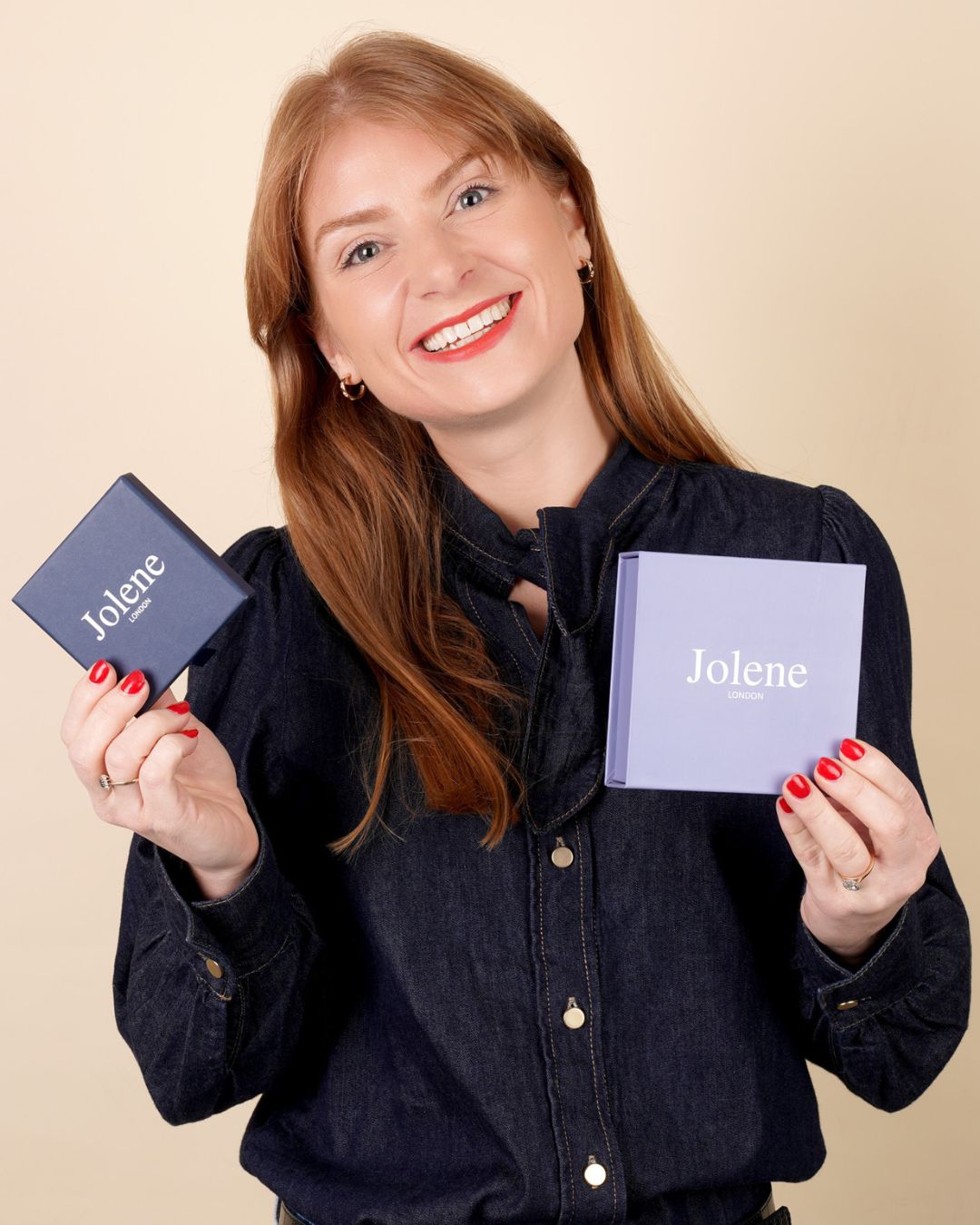
This week’s Female Founder Friday features Rebecca Hunter, founder of Jolene, a UK-based bra alternative brand creating premium nipple covers designed to help women feel comfortable and confident in their outfits. With 12 years of experience in marketing and helping small businesses scale, Rebecca decided it was time to put her expertise into building something of her own. After running Jolene as a side hustle for 18 months, she took the leap in February and left her full-time job to focus entirely on growing the business.
From turning an initial £2,500 into £250,000 in revenue to navigating the financial realities of scaling, Rebecca’s journey is a refreshingly candid look at entrepreneurship. We spoke about the importance of bootstrapping, finding the right founder community, protecting your financial wellbeing and recognising that sometimes taking a step backwards is exactly what a business needs to move forwards. Rebecca also shares why celebrating the small wins is just as important as chasing the big milestones.
You can follow Rebecca’s journey and her honest reflections on building a business through her LinkedIn profile, linked at the end of this interview.
FC: To start us off, could you give us a brief summary of your professional background and introduce Jolene?
Rebecca: Of course! I’m Rebecca Hunter, the founder of Jolene. I have around 12 years of experience in marketing, predominantly helping small businesses scale through performance marketing.
In February 2024, I decided to start my own business. I ran it as a side hustle for 18 months, and then in February this year, I quit my full-time job to go all in on the business.
Jolene is a UK bra alternative brand producing premium nipple covers for women who want to feel comfortable and confident in their outfits.
It's been an exciting journey moving from helping other businesses grow to building something entirely of my own.
FC: What fundraising challenges have you faced so far, and how have you navigated them?
Rebecca: None yet from the actual fundraising process, because I'm only just starting out.
I think the main challenge has really been around education and understanding. It's been a lot of learning about what I actually need to do to get to the stage of raising investment.
That's still very much a learning process, but I'm learning more every day. I don't think the learning ever really stops!
There are so many different elements involved in fundraising, and when you haven't done it before, it's about making sure you understand everything properly so you can make informed decisions.
FC: Have you faced any particular barriers as a female founder?
Rebecca: From a funding perspective, it's probably a little too early to say.
I think it'll be interesting once I actually start pitching to investors, to see how many no’s I get and what that process looks like. The interesting thing will be understanding whether there are any unconscious biases taking place.
But for now, I've been very fortunate to find myself in environments that are incredibly supportive of female founders.
Communities such as Buy Women Built, Businettes, Virgin StartUp and Female Founders Rise have been wonderful. Being able to speak with other founders who are on a similar journey and share experiences with them has been really valuable.
There's something reassuring about knowing that other people are going through similar challenges, even if their businesses are completely different from yours.
FC: Since joining FounderCatalyst, have there been any significant milestones within your business, or anything you're currently working towards?
Rebecca: I only joined FounderCatalyst this week, so the main thing I've been focusing on is going down the route of getting SEIS approval.
For me, it's about understanding the process, working towards SEIS Advance Assurance and making sure I'm taking the right steps to prepare the business for investment.
It's definitely an educational process, and I'm still figuring everything out as I go along.
FC: What advice would you give to female founders?
Rebecca: I've had a lot of learnings this year around scaling a business and trying to balance ambition with realism.
As a founder and entrepreneur, you can get really excited about the potential of your business and where it could go. Where I've been caught out this year is that I've been too ambitious with my growth plans.
I brought in additional overheads to support the growth I was expecting. The business did grow (100% YoY growth), but not to the level I'd anticipated.
Because of that, I then had to figure out how to pivot backwards and reduce those overheads to get the business back into a position where it would be profitable again in its second year.
The difficult thing is that, as the founder, you're always the person who gets paid last.
I've sacrificed my own salary to pay contractors and support the growth of the business.
Looking back, if I'd still been ambitious but had tried to do more myself rather than outsourcing things too early, I probably would have been in a position where I could continue paying myself and wouldn't have had to worry so much about my own finances.
That's ultimately led me to the position I'm in now, where I'm looking to raise investment.
My advice would be to bootstrap for as long as possible, or at least until you've built a couple of years of really strong traction that you can use as proof when raising.
I'm hoping that the fact I haven't raised investment straight away will make the business attractive to angel investors.
I've been able to turn £2,500 into a quarter of a million pounds in revenue without any external equity investment, and I think that's really important.
It demonstrates that you can build something and generate revenue before bringing in investors.
I would also say start small and get proof of concept.
I've seen founders whose families have invested over £50,000 into their businesses before they've properly tested their products or established product-market fit.
That terrifies me!
You don't even know whether anyone is going to buy your product, and suddenly you've ordered 10,000 units of stock.
So start small, test and learn, and try to bootstrap for as long as possible until you genuinely feel that you need external investment.
I'd also encourage founders to keep an eye out for different funding options.
Earlier this year, I took out a £25,000 Start Up Loan through the British Business Bank.
As the loan is personally guaranteed, I had quite a few sleepless nights in June when that money left my bank account.
I'd spent it on stock and contractors, and I remember thinking, "Oh my gosh, what if this doesn't come back?"
That's a lot of money to potentially have to repay over the next five years.
Luckily, the money did come back through the business, but I don't think I anticipated how much of a mental toll that would take on me.
Had I realised, I probably would have thought twice about taking on that level of debt finance.
I would have been a little more cautious.
So I think the overall message is about protecting your own financial security as a founder.
Be careful and considerate about the decisions you're making, especially when those decisions could have a significant impact on your personal finances and wellbeing.
It's important to have ambition and believe in your business, but you also need to make sure you're not putting yourself under unnecessary financial pressure in the process.
FC: Do you have any self-care tips or things you do to relax?
Rebecca: Spin classes are brilliant for getting your anger out!
Exercise is such a good way to feel better about yourself, particularly when you've had a stressful day.
At the beginning of the year, I signed up for a gym membership near me. It was probably a little more expensive than I should have been paying while bootstrapping my business, but it's been worth it.
It gives me a reason to get out of the house, let off some steam and have a bit of time to myself.
Sometimes I'll use that time to think through what I'm doing from a business perspective, and other times it's an opportunity to completely switch off.
I think the other really important thing is surrounding yourself with other female founders.
I've been fortunate enough to make some incredible friends who are in similar situations to me, and having people who understand what you're going through makes a huge difference.
Even something as simple as having a WhatsApp group can be really valuable.
I've got a friend called Eniye who runs a company called Beame. She's creating SPF patches that help people understand when they need to reapply sun cream, which is such a clever idea!
On Fridays, we try to share our weekly wins with each other.
Sometimes, when you're running a business, it's actually quite difficult to think of the wins you've had because you're always focusing on what's next or what still needs to be done.
Sharing those weekly wins forces your brain to think positively and recognise the good things you're achieving.
It doesn't have to be something enormous. Sometimes it's just about acknowledging that you've made progress.
So my advice would be to find people who are in a similar situation, who you can share the journey with and who genuinely understand and relate to what you're experiencing.
That support is so important.
FC: Is there anything you'd particularly like readers to know about Jolene or anywhere you'd like them to follow your journey?
Rebecca: I'd love people to connect with me on LinkedIn if they want to follow my journey.
I try to share honest takes on what it's like building a business, including the challenges and the realities that people don't always talk about.
For anyone interested, you can also follow Jolene's Instagram account to discover the brand and see what we're doing.
I think it's really valuable to share the journey openly because there are so many things you only learn by actually going through the process yourself.
Those interested can also visit our website (jolenebody.com) to see our collection of bra-alternatives.

A huge thank you to Rebecca for sharing such an open and insightful account of her entrepreneurial journey. From building Jolene with just £2,500 to generating £250,000 in revenue, her story demonstrates what's possible with determination, experience and a willingness to learn. But perhaps her most important message is that building a successful business shouldn't mean sacrificing your own financial security or wellbeing along the way.
We're delighted to welcome Rebecca to the FounderCatalyst community and look forward to supporting her as she prepares for her next stage of fundraising. Whether it's her advice to bootstrap carefully, the importance of surrounding yourself with like-minded founders or the simple joy of celebrating a weekly win, there is plenty for aspiring entrepreneurs to take away from her experience.
You can discover more about Jolene and follow Rebecca's journey through the links below.
Website: https://jolenebody.com/
Personal LinkedIn: https://www.linkedin.com/in/rebeccaannehunter/
Company Instagram: https://www.instagram.com/jolenebody_/
Author: Jen Jeffries, Marketing Executive at FounderCatalyst